Posts

Showing posts with the label KubernetesTrainingHyderabad

Docker & Kubernetes Training Online Recorded Demo Video

Image
Docker & Kubernetes Training Online Recorded Demo Video Mode of Training: Online Contact +91-9989971070 Visit: https://www.visualpath.in/ WhatsApp: https://bit.ly/47eayBz Our Youtube Channel: https://www.youtube.com/@VisualPath Watch Demo Video@  https://youtu.be/GWHmpzIYLJ4?si=iISBL35-rUn2Tjkt

Kubernetes Custom Resource Definitions (CRDs) and Custom Resources (CRs) for Operators

Image
Introduction: Kubernetes has revolutionized the way applications are deployed and managed in the cloud, offering robust orchestration and management of containerized applications. Central to its flexibility and power are Custom Resource Definitions (CRDs) and Custom Resources (CRs), which allow developers to extend Kubernetes’ functionality beyond its default capabilities. The Foundation of Extensibility: Custom Resource Definitions (CRDs) are at the heart of Kubernetes' extensibility. A CRD allows users to define new types of resources within Kubernetes, expanding the Kubernetes API to include custom resource types that are specific to an application or domain. Docker Online Training Custom Resource Definitions (CRD): Creating a CRD involves specifying a schema that outlines the structure and validation rules for the custom resource. Once a CRD is created, Kubernetes users can create instances of the custom resource, known as Custom Resources (CRs), to manage their ...

When to Use a Replication Controller in Kubernetes

Image
Introduction: Kubernetes has emerged as a cornerstone for managing containerized applications. One of the key components in Kubernetes that ensures the reliability and availability of applications is the Replication Controller (RC). Understanding when to use a Replication Controller can significantly enhance the stability and scalability of your applications. Docker Online Training What is a Replication Controller? Replication Controller is a core Kubernetes object designed to manage the lifecycle of a set of identical pods. Its primary function is to maintain a specified number of pod replicas running at any given time. If a pod fails or is deleted, the Replication Controller automatically creates a new pod to replace it, ensuring continuous availability. Key Benefits of Using a Replication Controller: Ensuring High Availability: Replication Controllers ensure that a specified number of pod replicas are running at all times. This automatic self-healing mechanism is cri...

Kubernetes with GitOps and Argo CD

Image
Introduction: GitOps , a modern approach to continuous delivery, addresses these needs by using Git as the single source of truth for declarative infrastructure and application configuration. Argo CD, a Kubernetes -native continuous deployment tool, pairs perfectly with GitOps to automate the deployment process, making it more efficient and less error-prone. Docker Online Training Understanding GitOps: GitOps is a methodology that uses Git repositories to manage and automate infrastructure and application deployments. It revolves around the principles of declarative configuration and version-controlled application infrastructure. Introducing Argo CD: Argo CD is an open-source, declarative, GitOps continuous delivery tool for Kubernetes. It synchronizes the desired state defined in Git with the actual state of the Kubernetes cluster, ensuring that the cluster configuration matches the repository. Docker and Kubernetes Training How Argo CD Implements GitOps: Repository S...

Kubernetes with GitOps: A Quick Guide

Image
Introduction: Kubernetes and GitOps have emerged as indispensable tools for managing complex applications. Kubernetes, a powerful container orchestration platform, provides the infrastructure to deploy, scale, and manage containerized applications seamlessly.   Docker and Kubernetes Training Embracing Kubernetes: Kubernetes has revolutionized the way applications are deployed and managed, offering a scalable and flexible infrastructure solution. By abstracting away the underlying infrastructure complexities, Kubernetes enables developers to focus on building and deploying applications without worrying about the intricacies of managing servers and dependencies. Scalability and Flexibility: One of the key features of Kubernetes is its ability to automatically scale applications based on demand. With features like horizontal pod autoscaling, Kubernetes ensures that applications have the resources they need to handle varying workloads efficiently. This scalability not only...

The Significance of Replication Controllers in Kubernetes

Image
Introduction: Kubernetes stands out as a dominant force, empowering developers and operators to efficiently manage and deploy applications at scale. At the core of Kubernetes' robust infrastructure lies the concept of replication controllers, a crucial component for ensuring scalability, reliability, and high availability of applications running within the Kubernetes cluster . The Role of Replication Controllers: Replication controllers serve as the guardians of desired pod state within a Kubernetes cluster. Simply put, they ensure that a specified number of pod replicas are running at any given time. This fundamental concept aligns perfectly with the distributed nature of containerized applications, where multiple instances of the same service may be necessary to handle varying loads and ensure fault tolerance. Docker and Kubernetes Training Ensuring Scalability: One of the primary use cases of replication controllers is to facilitate horizontal scaling of applicatio...

Kubernetes Clusters: Scalable and Reliable Containerized Applications

Image
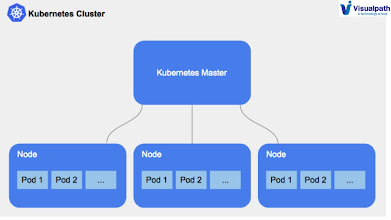
Introduction: Kubernetes has emerged as a cornerstone technology for managing containerized applications. At the heart of Kubernetes lies the concept of clusters, which serve as the foundation for orchestrating and scaling container workloads efficiently. - Docker and Kubernetes Training Kubernetes Clusters: Kubernetes cluster is a set of nodes (physical or virtual machines) that collectively run containerized applications orchestrated by Kubernetes. These clusters provide a cohesive platform for deploying, managing, and scaling container workloads across a distributed environment. Components of a Kubernetes Cluster: Master Node: At the core of every Kubernetes cluster is the master node, which orchestrates and controls the cluster's operations. The master node consists of several components, including the Kubernetes API server, scheduler, controller manager, and etcd (a distributed key-value store for storing cluster state). - Kubernetes Online Training Worker Nod...