Posts

Showing posts with the label Docker Training in Hyderabad

Multi-Cloud Docker & Kubernetes Online Recorded Demo Video

Image
Multi-Cloud Docker & Kubernetes Online Recorded Demo Video 👉Mode of Training: Online 📲Contact +91-9989971070 👉WhatsApp: https://www.whatsapp.com/catalog/919989971070/ 🌐Watch Demo Video @ https://youtu.be/lWyp9r1BsBQ?si=oxOiTB738GKlBbb8 🌐Visit : https://www.visualpath.in/kubernetes-multi-cloud-online-training.html

What is Kubernetes Container Security?

Image
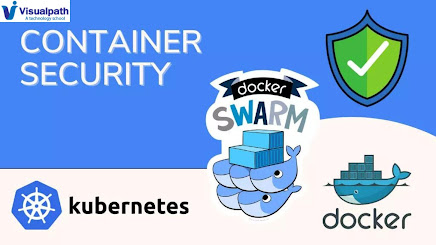
Introduction: Kubernetes has emerged as a leading platform for container orchestration. As organizations increasingly adopt Kubernetes to manage their containerized applications, the need for robust container security becomes paramount. In this article, we delve into the realm of Kubernetes container security, exploring its significance, challenges, and best practices. - Docker and Kubernetes Training Kubernetes Container Security: Kubernetes container security refers to the set of practices, tools, and strategies employed to safeguard containerized workloads orchestrated by Kubernetes. It encompasses various layers of security measures aimed at protecting the integrity, confidentiality, and availability of applications running within Kubernetes clusters. - Docker Training in Hyderabad Key Challenges in Kubernetes Container Security: Vulnerability Management: With containerized applications comprising multiple layers of software dependencies, managing vulnerabilities be...

CI/CD with Docker and Kubernetes

Image
Introduction: Docker and orchestration platforms like Kubernetes, CI/CD pipelines become even more powerful, offering scalability, reliability, and consistency throughout the entire software delivery lifecycle. - Docker and Kubernetes Training The Power of CI/CD: CI/CD is a software development practice that emphasizes frequent integration of code changes into a shared repository and automated testing and deployment. This approach brings numerous benefits, including reduced time to market, improved code quality, and enhanced collaboration among team members. - Kubernetes Online Training Containerization with Docker: Docker has revolutionized the way applications are packaged and deployed by encapsulating them into lightweight, portable containers. These containers bundle all the dependencies and libraries needed to run the application, ensuring consistency across different environments, from development to production. Orchestration with Kubernetes: While Docker simpl...

Guide to Setting Up a CI/CD Pipeline Process with Jenkins and Docker

Image
Introduction: Continuous Integration (CI) and Continuous Deployment (CD) pipelines are essential tools that enable teams to automate the building, testing, and deployment of their applications. Jenkins, a widely used automation server, combined with Docker, a popular containerization platform, provides a robust foundation for setting up such pipelines. - Docker and Kubernetes Training Understanding CI/CD Pipelines: CI involves automatically building and testing code changes as they are committed to the version control repository, ensuring that new changes do not introduce errors into the codebase. On the other hand, CD extends CI by automating the deployment of successful builds to production or staging environments, thereby enabling rapid and consistent delivery of applications. - Kubernetes Online Training Introduction to Jenkins and Docker: Jenkins is an open-source automation server that facilitates building, testing, and deploying software. It provides a user-friendly...

Docker Machine and Docker Swarm: How They Work?

Image
Introduction: Docker , with its containerization technology, has revolutionized how applications are built, shipped, and deployed. However, managing Docker containers across various environments can still be a daunting task, especially when dealing with multiple hosts or cloud providers. This is where Docker Machine comes into play, offering a streamlined approach to managing Docker hosts regardless of the underlying infrastructure. - Docker and Kubernetes Training Docker Machine: Docker Machine is a tool that enables developers to create and manage Docker hosts on local machines, remote servers, or cloud providers effortlessly. It abstracts away the complexity of setting up Docker environments by automating the provisioning process. With Docker Machine, developers can easily spin up multiple Docker hosts, each with its own configuration, to run containerized applications.  - Kubernetes Online Training Simplified Deployment Workflow: One of the key benefits of Docker M...

How to Store Images in Container Registries?

Image
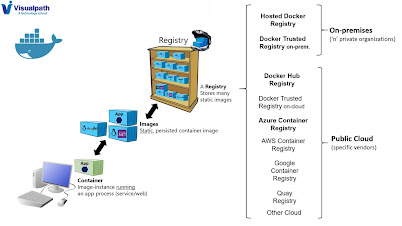
Introduction: Container registries serve as central repositories for storing and managing container images, facilitating seamless deployment across various environments. However, optimizing image storage within these registries requires careful consideration of factors such as scalability, security, and performance. - Docker and Kubernetes Training Choose the Right Registry: Selecting the appropriate container registry is the first step towards efficient image storage. Popular options include Docker Hub , Google Container Registry (GCR), Amazon Elastic Container Registry (ECR), and Azure Container Registry (ACR). Evaluate factors such as integration with existing infrastructure, pricing, security features, and geographical distribution to make an informed decision. Image Tagging Strategy: Implement a robust tagging strategy to organize and manage container images effectively. Use semantic versioning or timestamp-based tagging to denote image versions and updates clearly. A...

Docker Overlay Network Without Swarm

Image
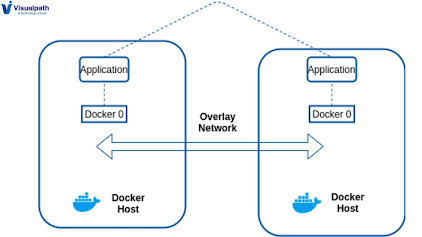
Introduction: Docker has revolutionized the way applications are deployed and managed by enabling containerization. One such networking option provided by Docker is the overlay network. While commonly associated with Docker Swarm , overlay networks can also be utilized without Swarm for various deployment scenarios. Understanding Docker Overlay Network: Overlay networks in Docker facilitate communication between containers across multiple Docker hosts. This network type abstracts the underlying physical network infrastructure, allowing containers to communicate as if they were on the same host. - Docker and Kubernetes Training Deployment without Swarm: Contrary to popular belief, Docker overlay networks can be set up and utilized without Docker Swarm. While Swarm provides orchestration capabilities for managing multiple Docker hosts , overlay networks can be created and managed independently using Docker's native networking commands. Here's a step-by-step guide ...